
What we offer
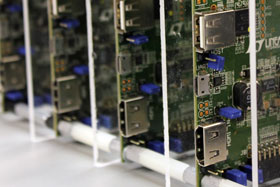
Embedded systems are everywhere in the world today, ranging from simple toasters to complex aircrafts. The concepts taught in embedded software courses are often quite abstract, so it is necessary to introduce a lab component where students can implement what they have learned onto real microcontrollers. However, setting up and maintaining development environments and toolchains for these systems requires a lot of time and effort. This issue is further aggravated by the need to constantly upgrade the lab hardware as new and better microcontrollers are constantly being released.
We offer a comprehensive solution to embedded systems labs. We support a wide variety of systems and are constantly upgrading our offering to include the latest and greatest microcontrollers. Our online development environment is professionally maintained and contains all the compilers, toolchains, and debuggers necessary for embedded development. With only a web browser, students will be able to access and develop on their own dedicated microcontroller hardware.
Labs



Supported MCUs
-
 AT89C2051
-
 AT91SAM9
-
 ATMega128
-
 ATMega1281-2561
-
 ATMega640-1280-2560
-
 ATXmega128A1-64A1
-
 ATtiny2313
-
 FSHC08
-
 FSHC11
-
 FSHC12
-
 FSHCS12
-
 FSKinetis
-
 FSMPC555
-
 FSMPC5554
-
 FSMPC5643L
-
 FSMPC565
-
 InfXC878
-
 MCPIC10F
-
 MCPIC12F
-
 MCPIC16F
-
 MCPIC18F
-
 MCPIC24F
-
 NXPLPC1xxx
-
 NXPLPC4xxx
-
 NXPLPC8xx
-
 RenesasH8S20xx
-
 RenesasRX210
-
 STM32F1
-
 STM32F2
-
 STM32F3
-
 STM32F4
-
 STMSPEAr
-
 STSPC5xx
-
 TIAM335x
-
 TIDM3730
-
 TIMSP430
-
 TIOMAP353x
-
 TITMS320
-
 TITMS470
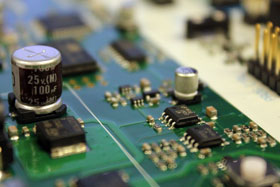
Electrical circuit design and analysis is a key component of many engineering curriculums. Labs on real circuit hardware are important to help solidify theoretical concepts and demonstrate how they relate to the real world. Traditional circuit labs require expensive instrumentation such as oscilloscopes, signal generators, and power supplies. This makes it very difficult to scale due to both cost and space.
We have developed a scalable method of delivering circuit labs online. Students will interface with real hardware circuits which are prewired to all necessary instrumentation. Furthermore, students have the ability to adjust the values of each component in the circuit. This provides the freedom for students to implement their own circuit designs and to investigate the role each component plays in the overall circuit behavior. With real circuit hardware readily available, students will have more opportunities to apply and verify their learning.
Basic Circuits and Filters
-
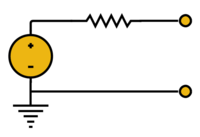 Series
-
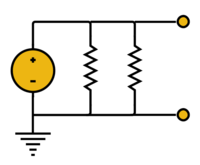 Parallel
-
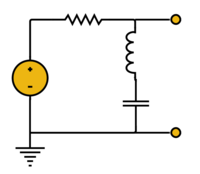 RLC
RLC
Operational Amplifiers
-
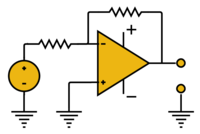 Inverting OpAmp
-
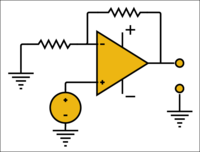 Non-inverting OpAmp
-
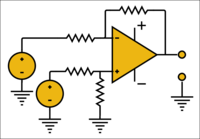 Difference Amplifier OpAmp
-
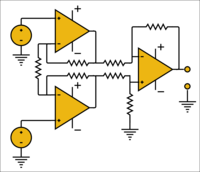 Instrumentation Amplifier OpAmp
-
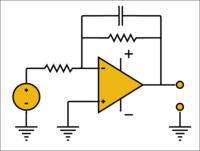 Lossy Integrator OpAmp
-
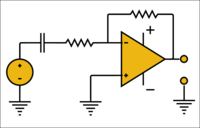 Lossy Differentiator OpAmp
Diodes
-
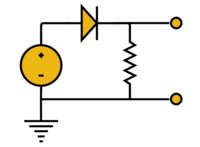 Diode I-V Transfer Curve
-
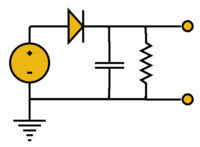 Rectifiers
-
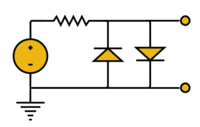 Limiting and Clamping Circuits
MOSFETs
-
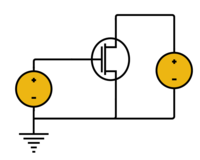 NMOS I-V Characteristics
-
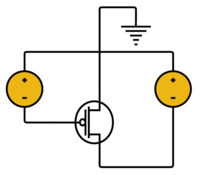 PMOS I-V Characteristics
-
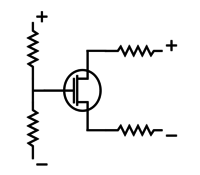 NMOS at DC
-
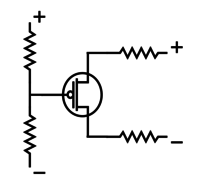 PMOS at DC
-
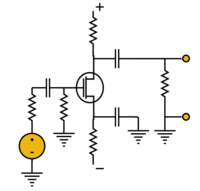 NMOS Common Source Amplifier
-
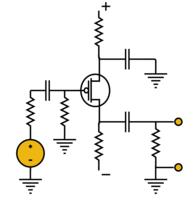 PMOS Common Source Amplifier
-
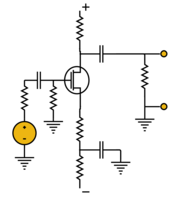 NMOS Common Source Amplifier with Source Degeneration
-
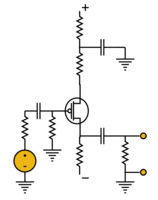 PMOS Common Source Amplifier with Source Degeneration
-
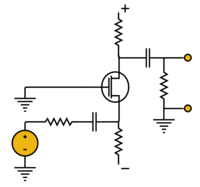 NMOS Common Gate Amplifier
-
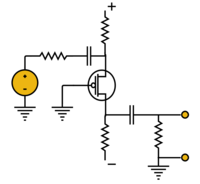 PMOS Common Gate Amplifier
-
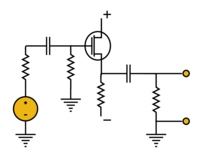 NMOS Source Follower
-
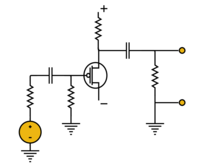 PMOS Source Follower
BJT
-
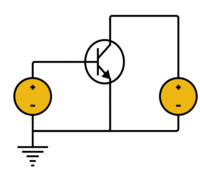 NPN I-V Characteristics
-
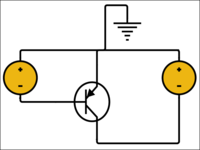 PNP I-V Characteristics
-
 NPN at DC
-
 PNP at DC
-
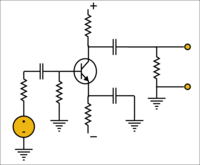 NPN Common Emitter Amplifier
-
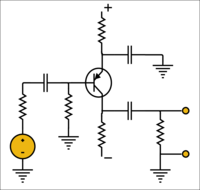 PNP Common Emitter Amplifier
-
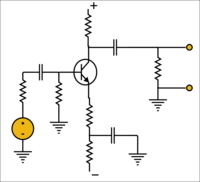 NPN Common Emitter Amplifier with Emitter Degeneration
-
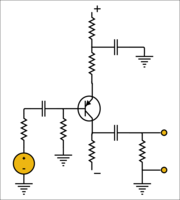 PNP Common Emitter Amplifier with Emitter Degeneration
-
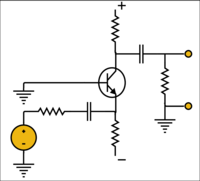 NPN Common Base Amplifier
-
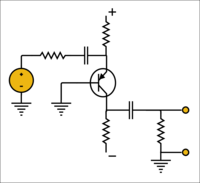 PNP Common Base Amplifier
-
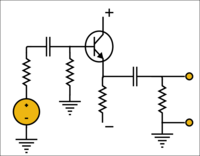 NPN Emitter Follower
-
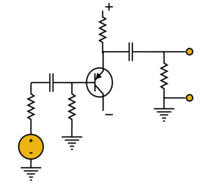 PNP Emitter Follower
-
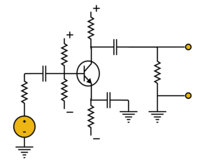 NMOS vs. NPN: Common Source/ Common Emitter Amplifier Comparison
Inverting OpAmp
Non-inverting OpAmp
Difference Amplifier OpAmp
Instrumentation Amplifier OpAmp
Lossy Integrator OpAmp
Lossy Differentiator OpAmp
Diode I-V Transfer Curve
Rectifiers
Limiting and Clamping Circuits
NMOS I-V Characteristics
PMOS I-V Characteristics
NMOS at DC
PMOS at DC
NMOS Common Source Amplifier
PMOS Common Source Amplifier
NMOS Common Source Amplifier with Source Degeneration
PMOS Common Source Amplifier with Source Degeneration
NMOS Common Gate Amplifier
PMOS Common Gate Amplifier
NMOS Source Follower
PMOS Source Follower
NPN I-V Characteristics
PNP I-V Characteristics
NPN at DC
PNP at DC
NPN Common Emitter Amplifier
PNP Common Emitter Amplifier
NPN Common Emitter Amplifier with Emitter Degeneration
PNP Common Emitter Amplifier with Emitter Degeneration
NPN Common Base Amplifier
PNP Common Base Amplifier
NPN Emitter Follower
PNP Emitter Follower
NMOS vs. NPN: Common Source/ Common Emitter Amplifier Comparison
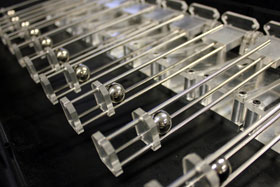
Control theory is fundamental to robotics and the operation of many mechanical systems. To truly appreciate the significance of this subject, students need to apply the theory to real systems and observe the effects that controllers have in the physical world.
Traditional systems used in control theory labs are often expensive with limited accessibility. With our platform, these same systems will be accessible from anywhere at anytime. The students will able to easily implement their custom controllers using our online development environment. These controllers will be applied to a real physical system housed remotely. After each run, a video of the system's behavior as well as all relevant graphs and data will be streamed to the student via the online dashboard.
Ball and beam

The goal of this lab is to design a controller to balance the ball at any specified position along the beam. The system dynamics are open loop unstable, so active feedback of the ball position and continuous actuation of the beam angle are required to balance the ball.
Single Inverted Pendulum

The goal of this lab is to design a controller to balance the free swinging pendulum in an upright position. The controller will use the angular position of the pendulum to compute the linear actuation required to balance the system.
Case studies are advanced physical systems that are used to gather experimental data and validate theoretical concepts. However, it takes a lot of time and effort to develop an in-depth case study, and even more resources must be put into maintaining it afterwards.
We offer a set of professionally developed, maintained, and verified case studies that are accessible online. Our online development environment will offer full access to the systems, which are all built on open platforms, and our dashboard will stream back all relevant data as well as videos of physical experiments in operation. Our goal is to help bridge the gap between the theoretical and practical aspects of research by making case studies readily accessible to all students and researchers.
Hexacopter
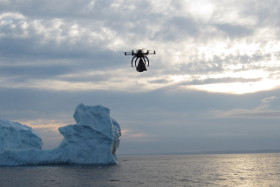
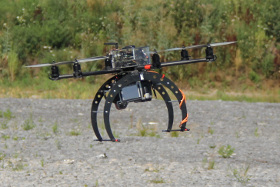
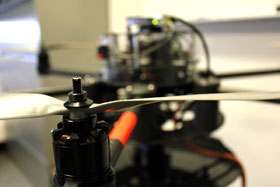
The Hexacopter case study consists of a fully operational hexacopter airframe, a custom built autopilot, and a HIL (hardware in the loop) simulator. The airframe and autopilot have been fully field tested through a series of missions including aerial mapping, thermal inspections of solar panels at a large solar farm, and tracking beacon deployment onto icebergs. The autopilot is built on an ARM Cortex A8 processor and is available under both QNX and RT-Linux. It contains a GPS sensor that communicates over NMEA protocol, an AHRS (attitude and heading reference system) sensor, and PWM generators for actuation control.
For the case study, the hexacopter airframe is mounted onto a tilt stand with three degrees of freedom. This accurately captures the vehicle's attitude dynamics by allowing it to roll, pitch, and yaw freely. For obvious safety reasons, the position of the vehicle is constrained by the stand. To compensate for this, the HIL simulator incorporates the AHRS sensor readings and internally simulates the position states of the vehicle over time. To mimic real flight conditions, the simulated positional states are converted to GPS messages, and fed back into the autopilot. The result is a fully functional hexacopter that can be operated safely from a remote location.
This case study was developed in collaboration with the University of Waterloo and CMC Microsystems.
Ackermann Steer Car
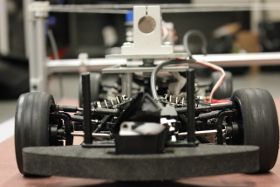
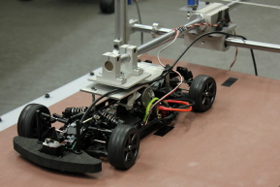
This case study consists of an Ackermann steered model car mounted on a treadmill. The steering angle of the car, the velocity of the car wheels, and the velocity of the treadmill can all be controlled independently. The car is unconstrained in the horizontal plane, and is free to move forwards/backwards, sideways, and yaw. There are sensors available to capture the position of the car on the treadmill as well as its heading. This case study has been successfully used to verify path following, lane changing, and cruise control algorithms.
This case study was developed in collaboration with the University of Waterloo and CMC Microsystems.
Custom labs
Our infrastructure is very versatile and can support a wide variety of labs. Please contact us if you have any custom requests or can't find what you are looking for in our current offerings. Our team of professionals look forward to working with you to develop and incorporate new offerings into our system.
Find out how Labforge can help you.
© 2013 Labforge